
Happy New Year 2025

Embrace the magic of new beginnings 🌟
Embrace the magic of new beginnings 🌟

A Story of Strength, Family, and the Lifelong Impact of Compassionate Mental Health Care When Lori first walked through the doors of River’s Bend, she wasn’t there for herself. She was a mother, fighting for her 12-year-old son, searching for answers after years of misdiagnoses, behavioral challenges, and growing substance use issues. What she found…
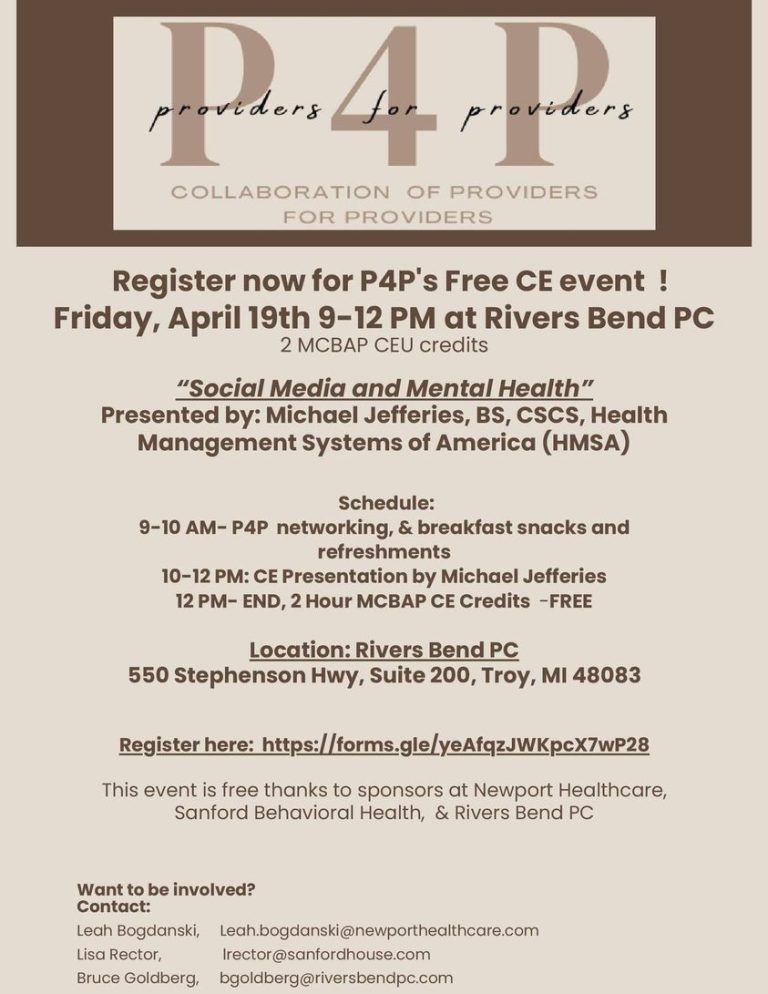
Please join us for an enriching and enlightening morning at the P4P’s complimentary CE event on Friday, April 19th, from 9 AM to 12 PM, at Rivers Bend PC in Troy, Michigan. Dive into the compelling world of “Social Media and Mental Health” with expert Michael Jefferies, while also enjoying a chance to network with…
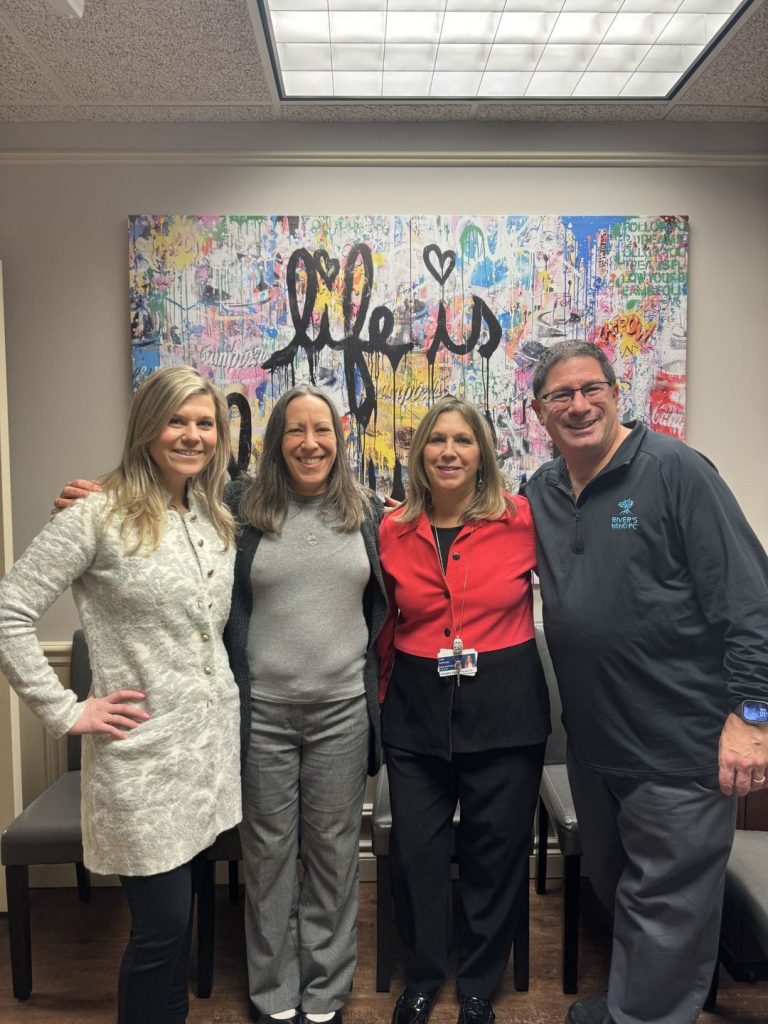
Thank you to Lisa Kaplan from Maplegrove for presenting today for our P4P Event at River’s Bend West and to Newport Healthcare and Sanford Behaviorial Health for co-sponsoring todays event.
When your client, patient, employee, or student reaches a point where outpatient therapy is no longer enough, yet inpatient hospitalization is not required, the question becomes: Where do we send them next? This is where River’s Bend Partial Hospitalization Program (PHP) serves as a trusted partner. Since 1995, River’s Bend has been a leader in…

Cognitive Behavioral Therapy (CBT) remains one of the most effective, evidence-based modalities for promoting long-term emotional regulation, relapse prevention, and adaptive coping skills.1 At River’s Bend, CBT principles are woven throughout every level of care, from Mental Health Intensive Outpatient Programs (IOP) to Partial Hospitalization (PHP) and continuing outpatient support. Our goal is to not…

Understanding the Question A lot of people ask this question long before anyone else knows they are concerned: do I have a drinking problem? Often, the reason it feels difficult to answer is because drinking issues do not always look dramatic from the outside. You do not have to drink every day, lose your job,…