
What Is 7-OH? Understanding High-Potency Kratom-Derived Products
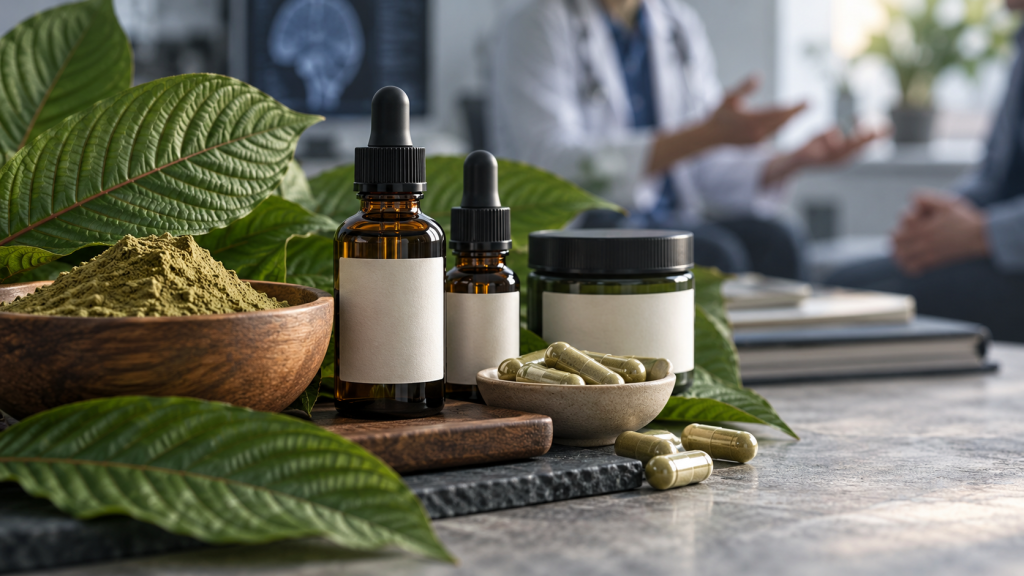
Products containing concentrated 7-hydroxymitragynine are raising concerns about addiction, withdrawal and consumer safety. Here’s what families and behavioral-health professionals should know.
A person begins using a product they purchased at a smoke shop. They believe it’s related to kratom, a plant-based substance they’ve heard can help with discomfort or relaxation.
At first, they may not consider it particularly risky. It’s available for purchase, comes in familiar packaging and doesn’t necessarily resemble the substances they associate with addiction.
But over time, they may notice they’re using more frequently. They may feel uncomfortable when they go without it. What began as occasional use may become something they struggle to stop.
This is one reason behavioral-health professionals are paying closer attention to 7-hydroxymitragynine, commonly known as 7-OH.
River’s Bend Practice Manager Amy Buchanan reported hearing more inquiries about 7-OH than usual in October 2026. This observation describes inquiries, not confirmed diagnoses or how common 7-OH use is in the community.
What Exactly Is 7-OH?
7-hydroxymitragynine is a compound associated with kratom, a tropical plant native to Southeast Asia.
Kratom contains several naturally occurring alkaloids, including mitragynine and 7-hydroxymitragynine. These compounds interact with opioid receptors in the body, although their effects and pharmacology are not identical to those of conventional prescription opioids.
In traditional kratom leaf, 7-OH occurs in relatively small amounts.
However, some commercially available products contain concentrated or enhanced levels of 7-OH, creating an important distinction between the plant itself and newer products marketed under the kratom name.
The U.S. Food and Drug Administration has warned that concentrated 7-OH products are potent opioid products that may cause serious harm.
Unlike traditional kratom leaf, these products may be specifically formulated to deliver substantial amounts of 7-OH.
The important distinction is that a product marketed as kratom may not resemble traditional kratom in its composition or effects.
Why Is Concentrated 7-OH Different From Traditional Kratom?
Kratom products are not all the same.
A product containing powdered kratom leaf may have a very different chemical profile from a tablet or liquid formulated with concentrated 7-OH.
The FDA has identified concentrated 7-OH products sold as tablets, gummies, drink mixes and shots.
Some are marketed for relaxation, pain relief, mood enhancement or relief from opioid withdrawal.
Yet the FDA has not approved 7-OH for any medical use, and these products have not been established as safe or effective treatments for pain, anxiety, opioid withdrawal or other conditions.
That distinction can be easy to miss when products are sold alongside ordinary consumer goods.
For families, the question isn’t simply whether someone is using kratom.
It’s which product they’re using, what it contains and how that use is affecting them.
Can 7-OH Cause Addiction or Withdrawal?
Yes. Concentrated 7-OH products have the potential to cause dependence and addiction.
Because 7-OH acts on opioid receptors, repeated exposure may lead to physical dependence, meaning the body adapts to the substance and withdrawal symptoms can occur when use is reduced or stopped.
Physical dependence and addiction are related but not identical. Withdrawal can occur with dependence; a substance-use disorder involves a broader pattern of impaired control or continued use despite harm. A clinician considers the full pattern rather than diagnosing addiction from withdrawal alone.
Recognizing Physical Dependence and Withdrawal Symptoms
The FDA has received reports of adverse effects associated with 7-OH products, including addiction, anxiety, depression, insomnia, gastrointestinal distress, seizures and withdrawal.
Reported withdrawal symptoms include:
- Restlessness and irritability
- Body aches
- Fatigue
- Cold sweats
- Difficulty sleeping
- Anxiety or emotional distress
The severity of symptoms can vary depending on the product, pattern of use, individual health circumstances and other substances involved.
Research into concentrated 7-OH products is still developing, so there are important gaps in understanding their full range of risks.
For someone who has become dependent, stopping may be more difficult than they anticipated.
That is one reason seeking medical advice before attempting to discontinue heavy or frequent use can be important.
Why Are People Turning to Products Like 7-OH?
There isn’t one explanation.
Some people may be seeking relaxation or relief from discomfort. Others may be experimenting with products they believe are relatively safe because they’re sold openly.
Still others may turn to kratom-related products while trying to reduce or stop using another substance.
Tana Lewis, a member of River’s Bend’s business development team, has spent years working in substance-use and behavioral-health settings.
During a recent interview, she described encountering people who turned to substances such as kratom while trying to move away from something else.
“A lot of times they’re trying to get off of something else,” Lewis explained.
In some cases, she said, the substitute substance becomes a new source of problematic use.
That observation is important because someone’s initial motivation may have been to improve their health or regain control over substance use.
A person attempting to manage opioid withdrawal on their own, for example, may not recognize the risks of using a concentrated kratom-derived product.
Understanding that motivation can help families and professionals approach the situation with greater compassion.
Instead of asking only why someone is using 7-OH, it may be more useful to ask:
What were they hoping it would help them with?
The answer may reveal untreated pain, anxiety, previous substance dependence or other concerns that deserve attention.
When a Product Seems Safe Because It’s Sold in a Store
The location of a purchase can shape how safe a product feels. A professionally packaged tablet or shot may seem like an ordinary wellness purchase even when it contains a potent opioid-active compound.
The FDA’s consumer guidance warns about enhanced 7-OH products sold through online and retail channels. It has not approved 7-OH for any medical use. Product availability and marketing language do not establish safety.
Families who want to understand that misconception more deeply can read our companion discussion of natural branding and safety.
What Should Families Watch For?
Families may notice a pattern before they recognize a product name: more frequent use, difficulty cutting back, discomfort when the person stops, or use that begins interfering with responsibilities and relationships.
Bruce Goldberg, LMSW, CAADC, SAP, President and Co-Owner of River’s Bend, encourages families to pay attention to changes in functioning. Fatigue, financial difficulties, withdrawal from activities or mood changes can warrant a conversation, but none is specific to 7-OH or proves a substance-use disorder.
Ask what the exact product is, whether the amount has increased, what happens without it and whether it is used with alcohol, opioids, sedating medications or other substances. Those answers help a qualified professional understand the concern.
Our family-support article offers more guidance on supporting someone who may not yet be ready for help.
How to Talk to Someone You’re Worried About
Discovering an unfamiliar substance can be frightening.
A parent may react with anger. A partner may feel betrayed. A friend may be unsure whether to say anything at all.
But an accusatory conversation can make it more difficult for someone to share what is actually happening.
Goldberg recommends beginning from a position of care.
“Make sure that you talk to the person from the level of I love you and I’m concerned about you,” he said.
His advice is to approach the situation as a conversation about well-being rather than a punishment.
For example:
I’ve noticed you’ve been having a hard time lately, and I’m worried about you. Can you tell me a little more about what you’ve been taking and how it’s affecting you?
That kind of question creates room for someone to explain their experience.
It may also uncover something the family didn’t know: that the person has tried to stop, is afraid of withdrawal or began using the product to manage another problem.
The goal is not to become an expert in every emerging substance.
It’s to understand enough to help someone take a safer next step.
What Does a Professional Assessment Look For?
When someone seeks help for 7-OH use, the product name is only one piece of the clinical picture.
Goldberg emphasizes the importance of understanding how much someone is using, how often they use it and how they perceive its safety.
He also considers what happens when the person goes without the substance.
Evaluating the Full Clinical Picture
These questions help clarify whether someone may be experiencing dependence, withdrawal or other complications requiring medical attention.
- A comprehensive assessment may consider:
- The exact product and its known ingredients
- Frequency, amount and duration of use
- Previous attempts to reduce or stop
- Withdrawal symptoms or other medical concerns
- Use of alcohol, medications or additional substances
- Mental-health symptoms and co-occurring conditions
- Changes in functioning and relationships
- The person’s goals, readiness and available support
Testing capabilities depend on the assay and the substances it is designed to detect. A clinician should not assume that a routine screening panel identifies an unfamiliar kratom-derived product; product history and symptoms remain important.
Goldberg also emphasizes determining the appropriate level of care.
“We have to understand what we’re dealing with first to know if we’re the right level of care, or we need to refer to another level of care.”
Some individuals may benefit from outpatient behavioral-health treatment. Others may first need medical evaluation, withdrawal management or more intensive services.
That decision should be guided by an individualized assessment rather than assumptions about the substance.
A substance abuse evaluation can help connect product use with the person’s physical health, mental health and daily functioning. Whole-person care keeps those needs in view.
Depending on clinical fit, ongoing options may include a Substance Use Disorder Intensive Outpatient Program (IOP) or other support. Our guide to specialized outpatient programs explains why the same program will not fit everyone.
For a non-emergency concern, you can ask River’s Bend about assessment and care options. Medical needs and withdrawal management may require another qualified provider.
Is 7-OH Dangerous?
Concentrated 7-OH products can cause serious harm, particularly because of their opioid activity, potential for dependence and uncertainty surrounding product contents.
The FDA advises consumers to avoid products containing added or enhanced levels of 7-OH.
There is particular concern when 7-OH is used with other substances that depress the central nervous system, including opioids, alcohol and certain sedating medications.
Severe intoxication or overdose may involve slowed or absent breathing, unresponsiveness or other life-threatening symptoms.
If someone cannot be awakened, is breathing abnormally or appears to be experiencing an overdose, call 911 immediately. Administer naloxone if available and follow emergency-dispatch instructions. Naloxone may help reverse opioid-related respiratory depression, but emergency medical evaluation is still necessary.
For someone experiencing dependence without an immediate emergency, speaking with a qualified healthcare professional can help determine how to address withdrawal and ongoing treatment needs safely.
You Don’t Have to Wait Until You Know Exactly What’s Wrong
For someone struggling with 7-OH use, asking for help may feel intimidating.
Individuals may not view themselves as dependent, often feeling hesitant to seek help due to embarrassment over using a substance they initially believed was safe. Furthermore, many have tried to quit independently, only to discover that stopping is much more difficult than anticipated.
Families may be equally uncertain.
Questions about 7-OH often begin with uncertainty about the product, its effects or why stopping has become difficult.
Goldberg’s approach begins with learning about the person, not making assumptions based on the product alone.
And Lewis emphasizes the importance of helping people find appropriate resources, even when the best option is outside River’s Bend.
If you or someone you care about is struggling with 7-OH, kratom or another substance, a conversation can help clarify what is happening and what support may be appropriate.
You don’t need to know every answer before asking for help.
References
- FDA — Products Containing 7-OH Can Cause Serious Harm
- FDA — FDA and Kratom
- FDA — Hiding in Plain Sight and current 7-OH updates
- CDC — 5 Things to Know About Naloxone
- Professional perspectives: River’s Bend interviews with Bruce Goldberg and Tana Lewis, October 6, 2026. Interview experience is distinct from published research.